Blog
Guides and inspiration for beautiful mehndi.
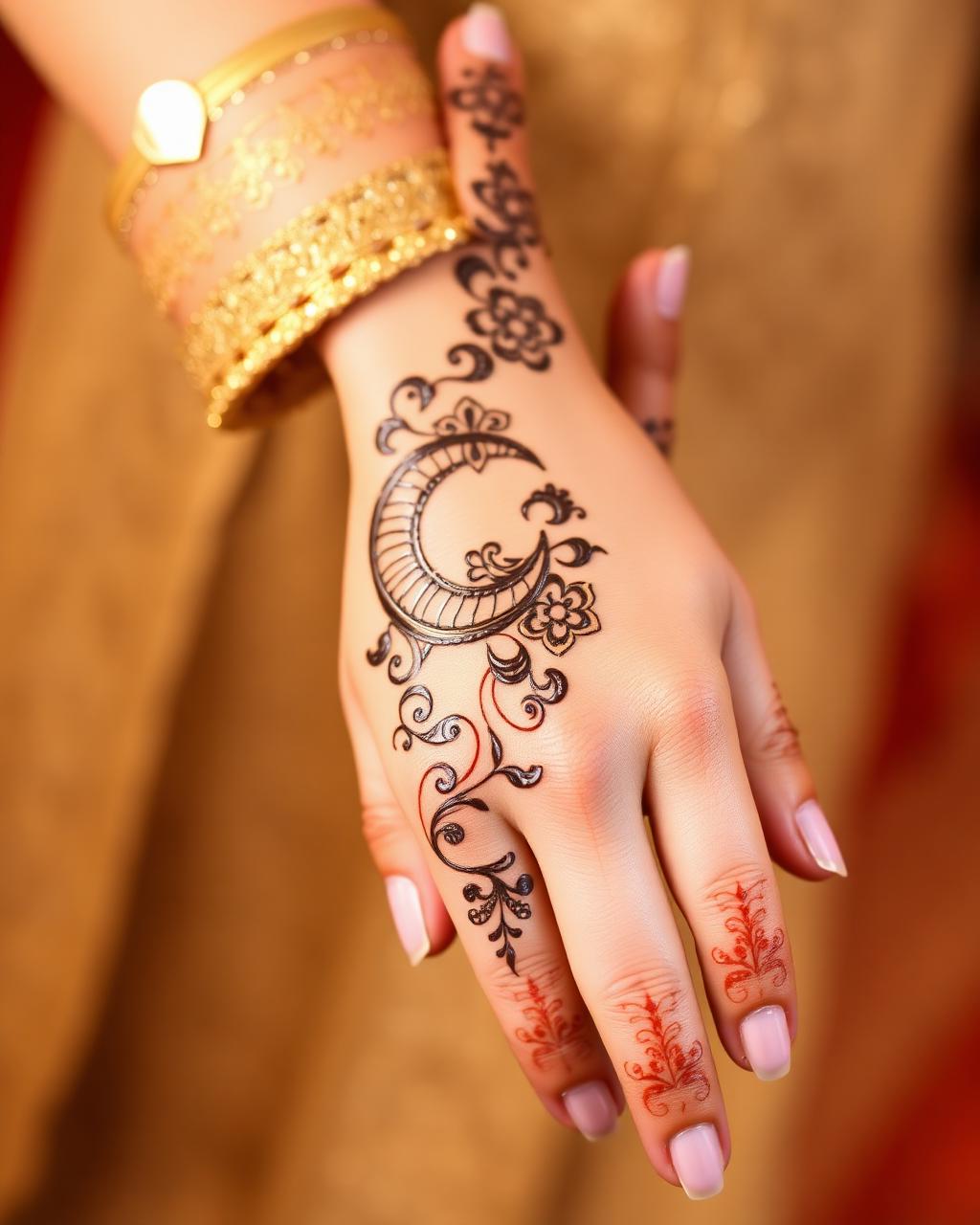
Raksha Bandhan mehndi is usually best when it is festive, neat and easy to fit into a busy family day. This guide covers simple palm motifs, back-hand patterns, finger designs, mandalas and quick options for sisters and girls.
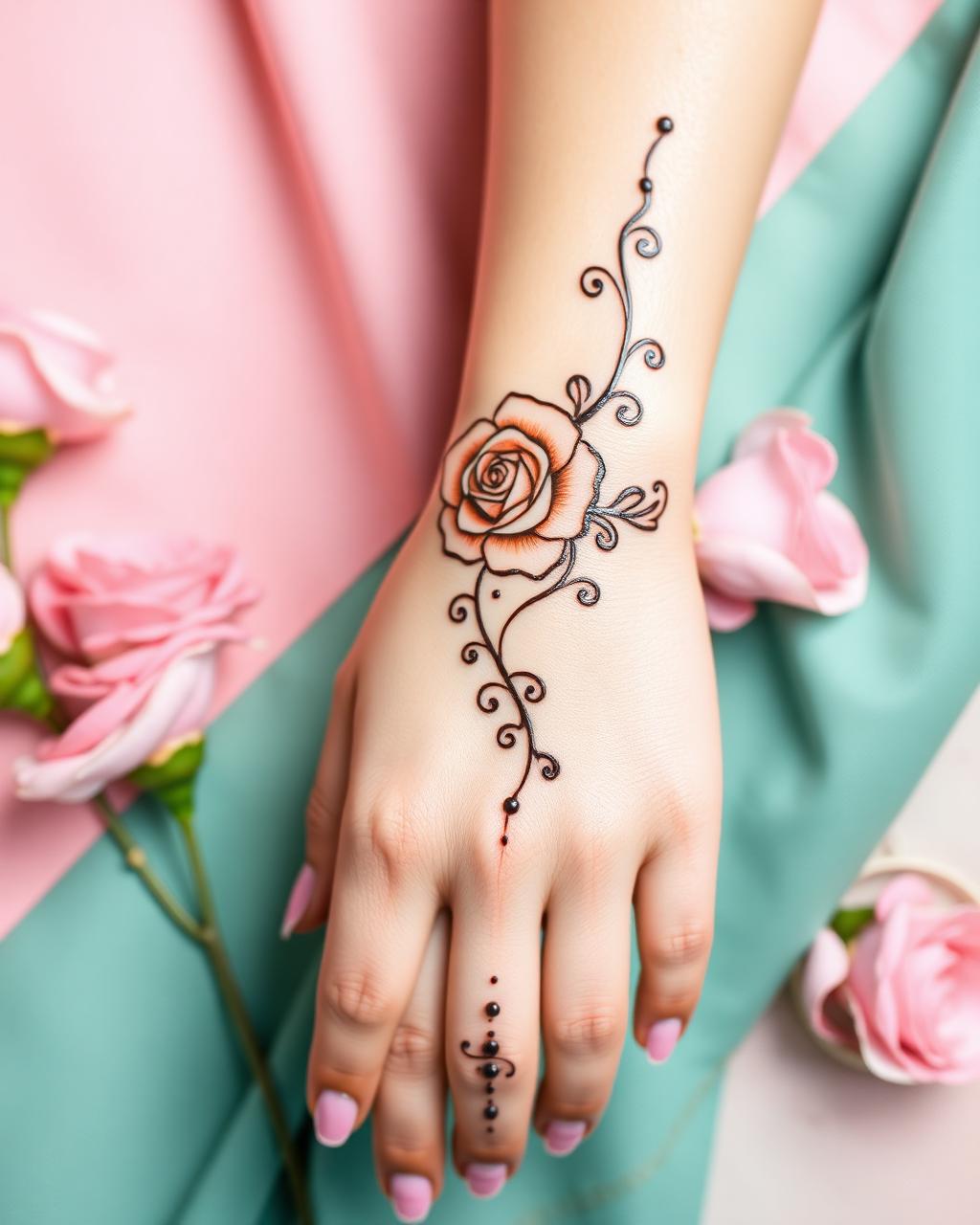
Beginner mehndi problems usually come from cone control, spacing, scale and overworking small mistakes rather than a lack of design ideas. This guide explains common errors and practical ways to recover without making the hand look crowded.
Teej mehndi can be quick and simple or richly traditional, depending on the celebration and time available. This guide covers mandalas, florals, front and back hand styles, bangles, outfit pairing and practical application choices.
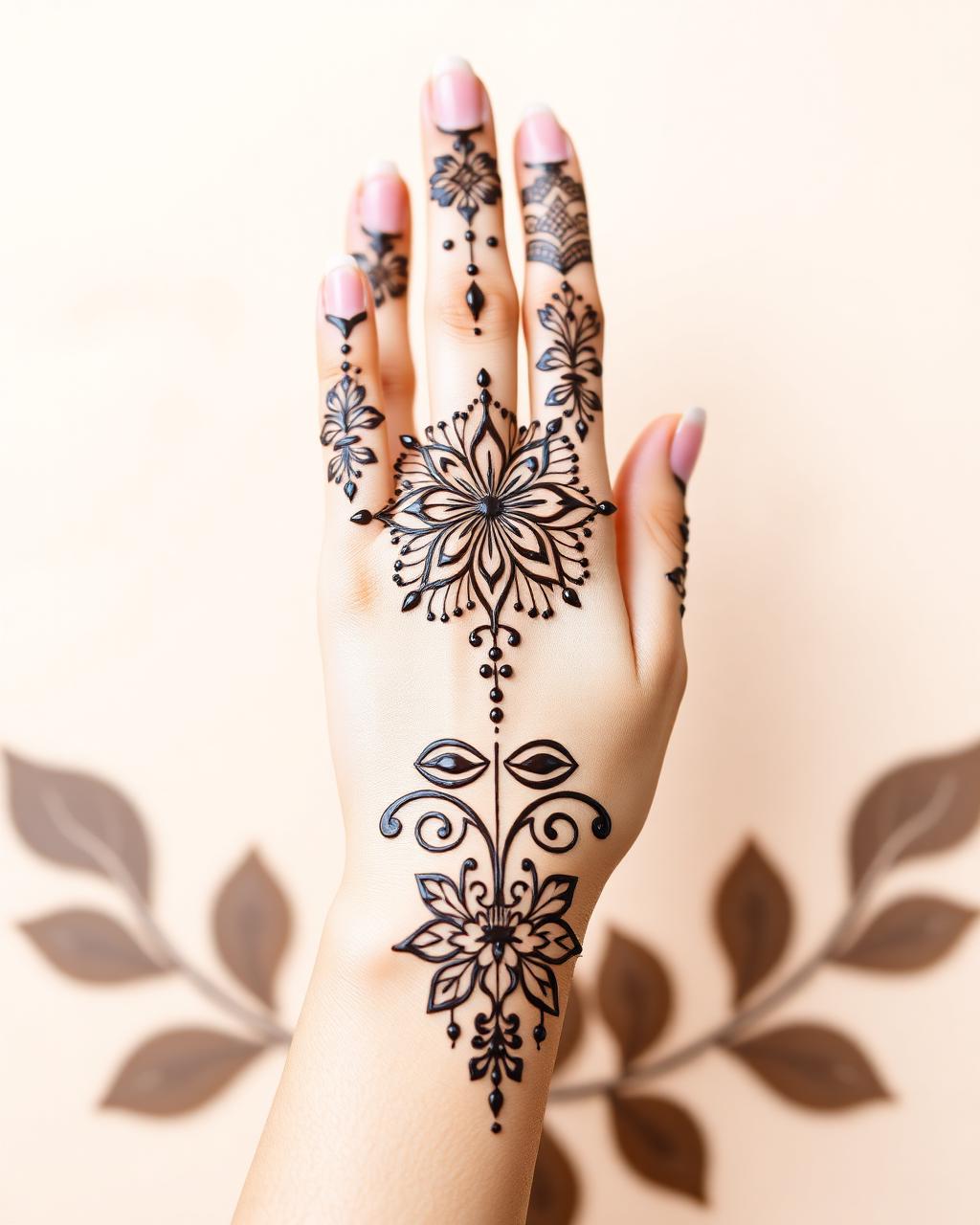
Moroccan mehndi stands apart for its geometric lines, diamonds, grids and structured negative space. This guide explains hand placement, symmetry, modern styling and how to combine sharp patterns with softer details.
Learning mehndi becomes easier when cone pressure, hand support and line movement are controlled before complicated motifs are attempted. This practical guide explains grip, pressure, line thickness, practice drills and common control problems.
Rose mehndi can be soft and minimal or deeply detailed with shaded petals and floral trails. This guide covers rose sizes, front and back hand placement, bridal combinations, finger styling and ways to keep the flower readable.
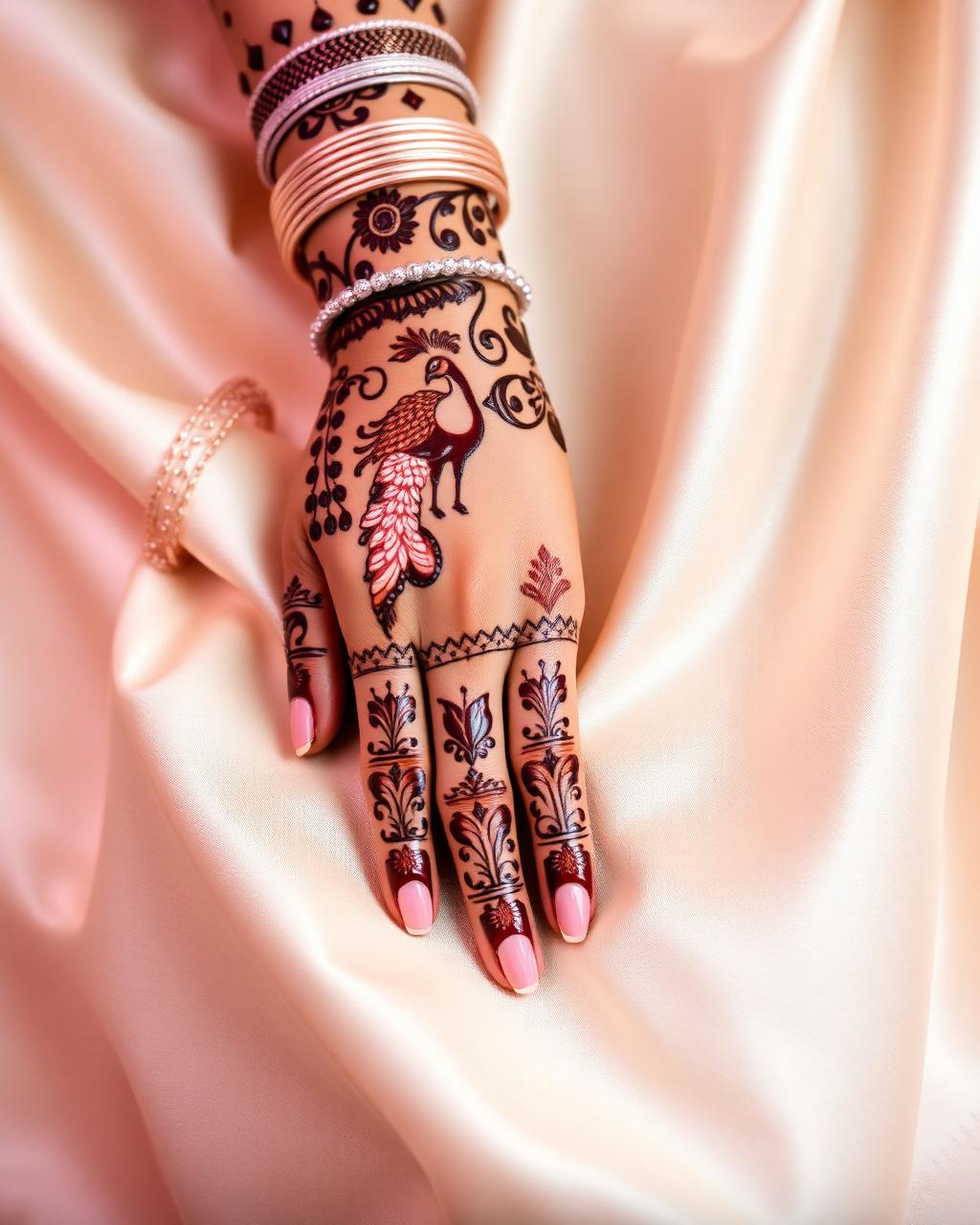
Rajasthani mehndi is known for detailed traditional compositions, mirror-like balance and storytelling motifs. This guide explains bridal layouts, figures, peacocks, jewellery elements and ways to keep dense designs readable.
Baby shower mehndi can be playful, personal and comfortable without heavy coverage. This guide covers cute motifs, mother-to-be designs, names and dates, simple hand layouts, family ideas and practical comfort considerations.
Personalized bridal mehndi can include names, dates, initials, places, pets, hobbies and small moments from a couple’s story. This guide explains what personal details work well in henna and how to keep them readable inside a rich bridal design.
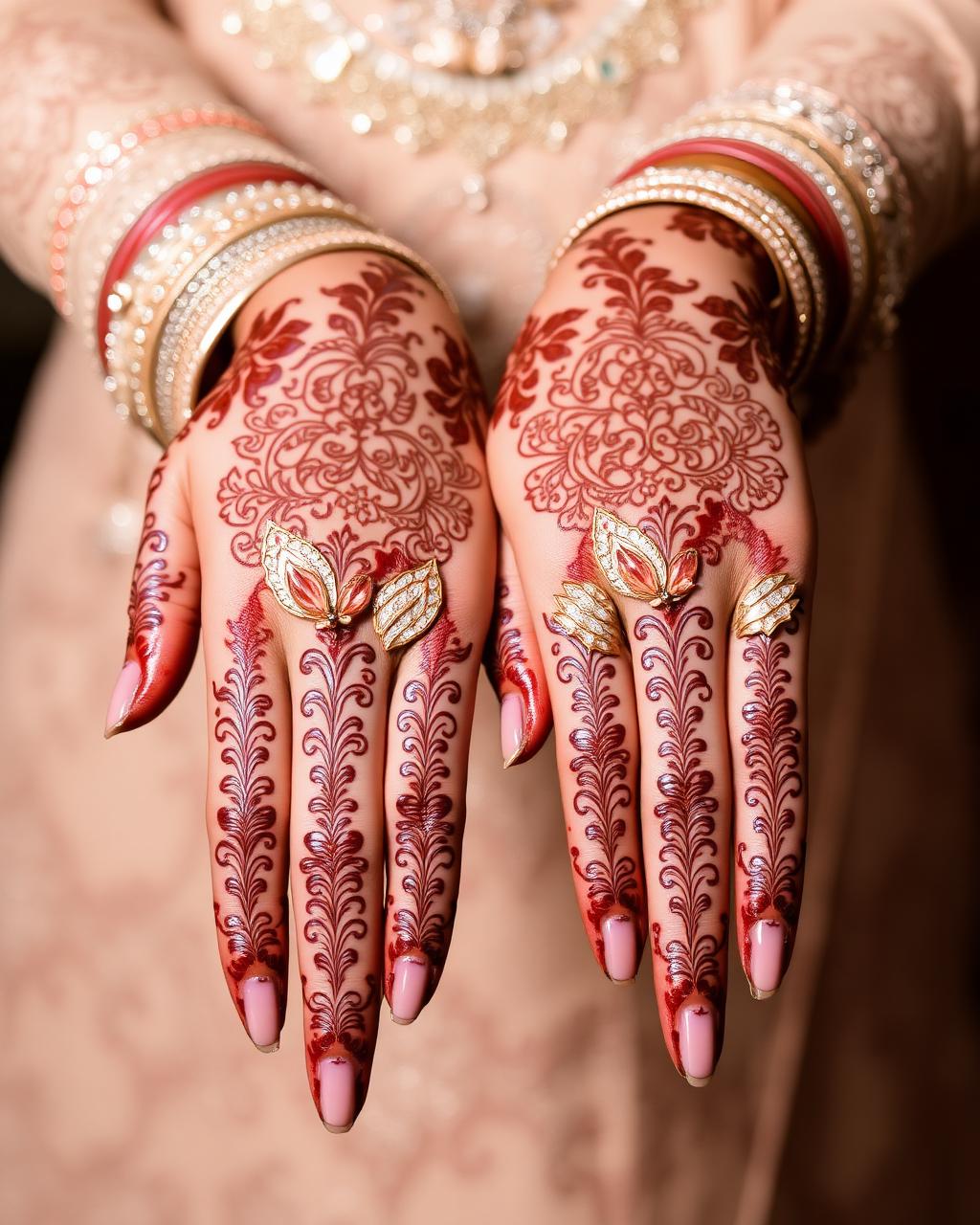
Pakistani mehndi often blends fine traditional detail with flowing floral and Arabic-inspired elements. This guide covers bridal layouts, back-hand patterns, jaali, florals, finger styling and ways to choose a balanced design.
Sangeet mehndi should look beautiful in photographs without making dancing, dressing and last-minute preparation harder. This guide covers stylish front and back hand layouts, jewellery-friendly designs, quick options and practical timing.
Peacock mehndi brings a recognisable traditional motif into both simple and detailed designs. This guide covers palm placement, feather styling, bridal compositions, symmetry and ways to keep the bird shape clear.
Kids mehndi works best when the design is small, comfortable and quick to apply. This guide covers age-friendly motifs, palm and back-hand ideas, finger details, event planning and ways to keep children comfortable while the henna dries.
Indian mehndi includes far more than one look, from mandalas and paisleys to peacocks, jaali, florals and personalised bridal storytelling. This guide explains the major visual styles and how to choose the right level of detail.
Floral mehndi can feel soft and minimal or rich enough for a bride. This guide compares flower types, lotus motifs, leafy trails, front and back hand placement, and ways to keep floral patterns from becoming repetitive.
Jewellery mehndi uses bracelet bands, ring chains, finger details and hanging elements to create the look of hand jewellery with henna. This guide explains placement, spacing, styling and how to keep real jewellery visible.
Mandala mehndi uses a circular focal motif that can stay minimal or expand into a detailed bridal composition. This guide explains sizing, centering, finger pairing, back-hand placement and ways to avoid stiff-looking symmetry.
Minimal mehndi is about deliberate placement, clean lines and open skin rather than simply using fewer strokes. This guide covers modern motifs, jewellery-friendly layouts and easy ways to make a light design feel finished.
Half hand mehndi is a practical middle ground between a tiny motif and full-hand coverage. This guide explains palm, wrist and forearm layouts that look complete without feeling crowded.
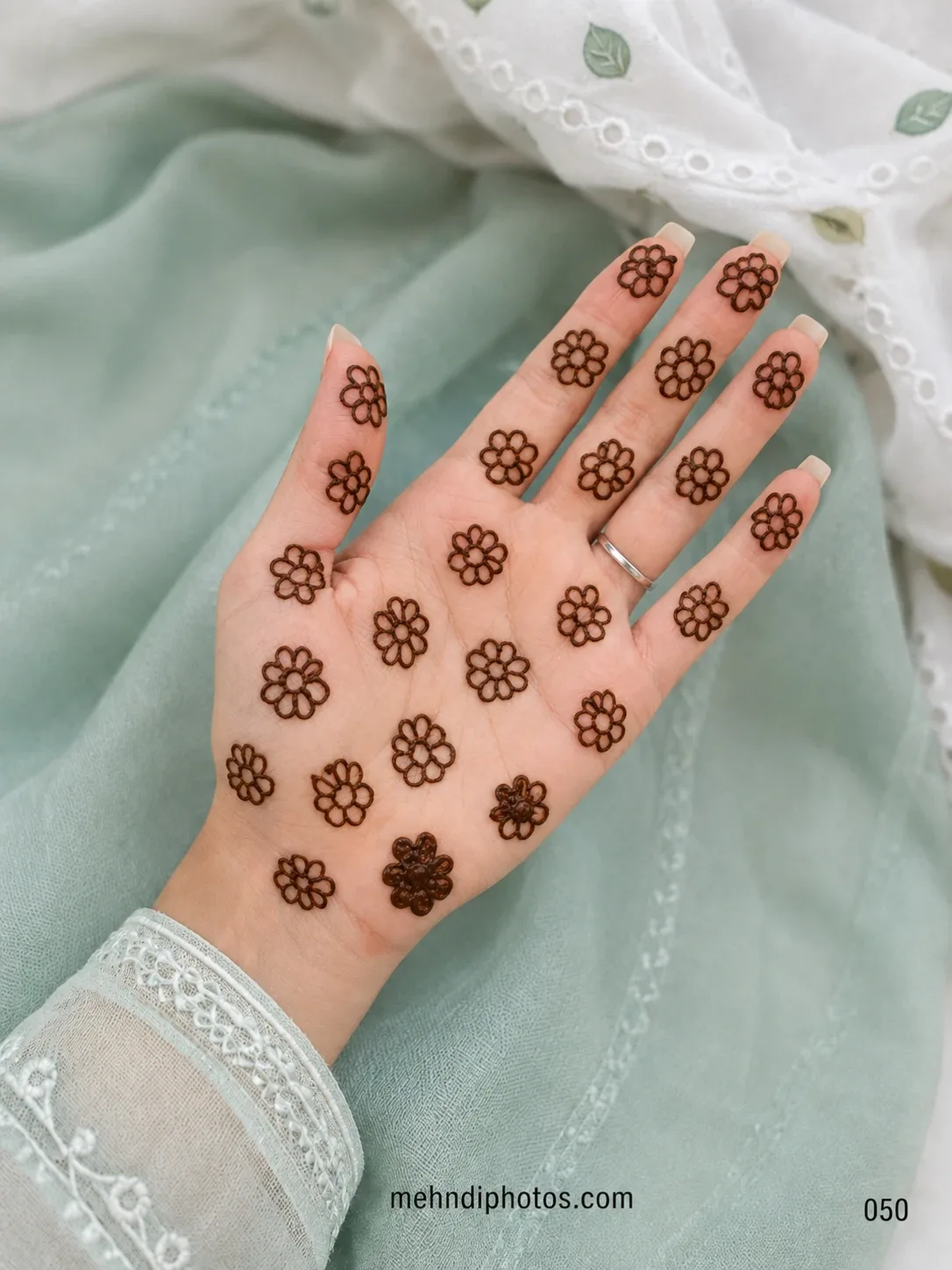
How long should mehndi paste stay on the skin? Learn practical timing, when to remove dried henna, what to do afterwards and why the stain continues to deepen after removal.
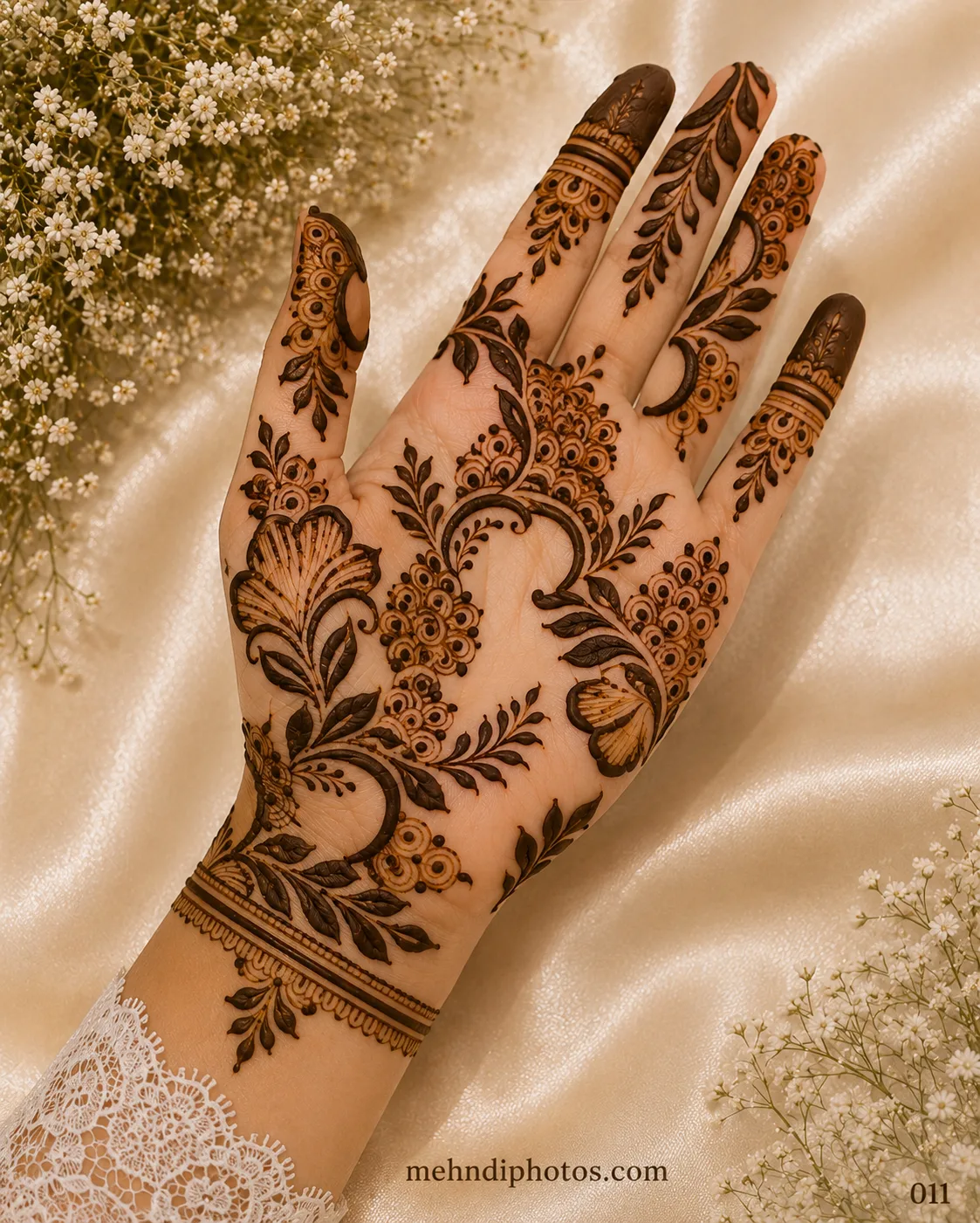
Looking for mehndi that feels stylish without becoming too heavy? This guide covers simple front-hand, back-hand, finger, floral, Arabic and festival-friendly ideas for girls and young women.
Explore the mehndi styles shaping 2026, from personalised bridal storytelling and negative space to bold florals, bracelet bands, mandalas and modern Indo-Arabic fusion.
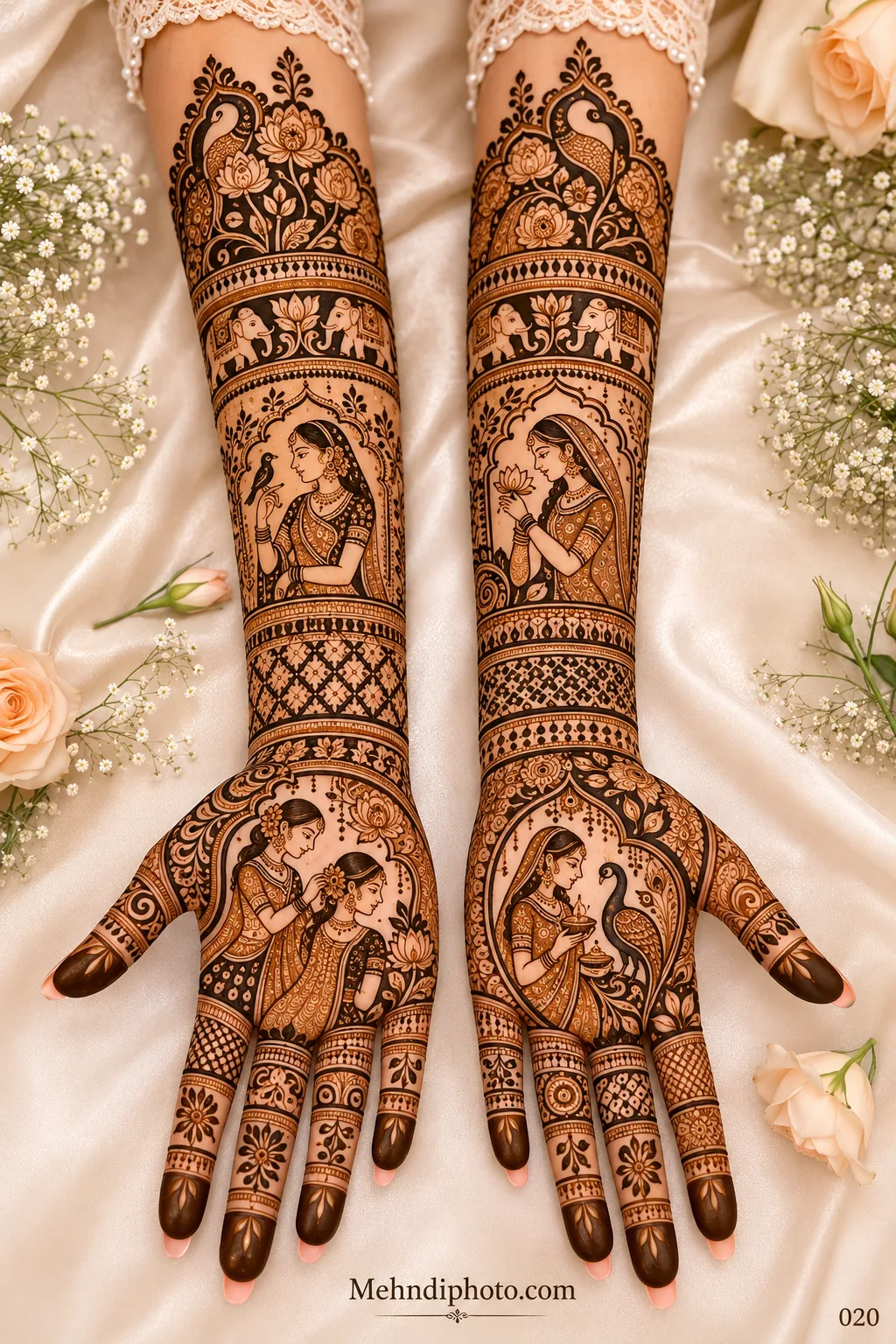
Full hand mehndi can look rich without becoming visually crowded. This guide explains coverage, motif balance, finger planning, bridal layouts and how to choose a design that suits your hand and occasion.
A darker mehndi stain depends on good henna, enough contact time and gentle aftercare. Learn what helps, what to avoid and how the colour naturally develops after the paste comes off.
Wedding mehndi can mean full bridal coverage, elegant engagement-style hands or a quick design for guests. This guide helps you choose the right style, coverage and placement for every wedding function.
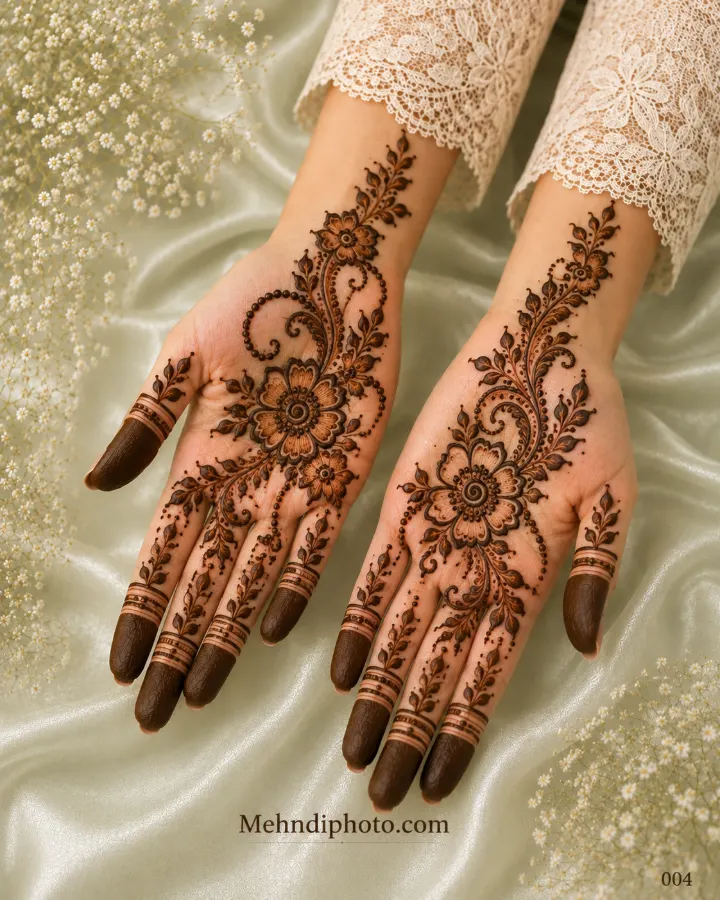
Eid mehndi can be bold and detailed or light enough for a quick Chand Raat application. This guide covers simple, Arabic-inspired, front-hand, back-hand and finger designs, plus practical tips for choosing coverage, pairing henna with jewellery and getting a cleaner stain.
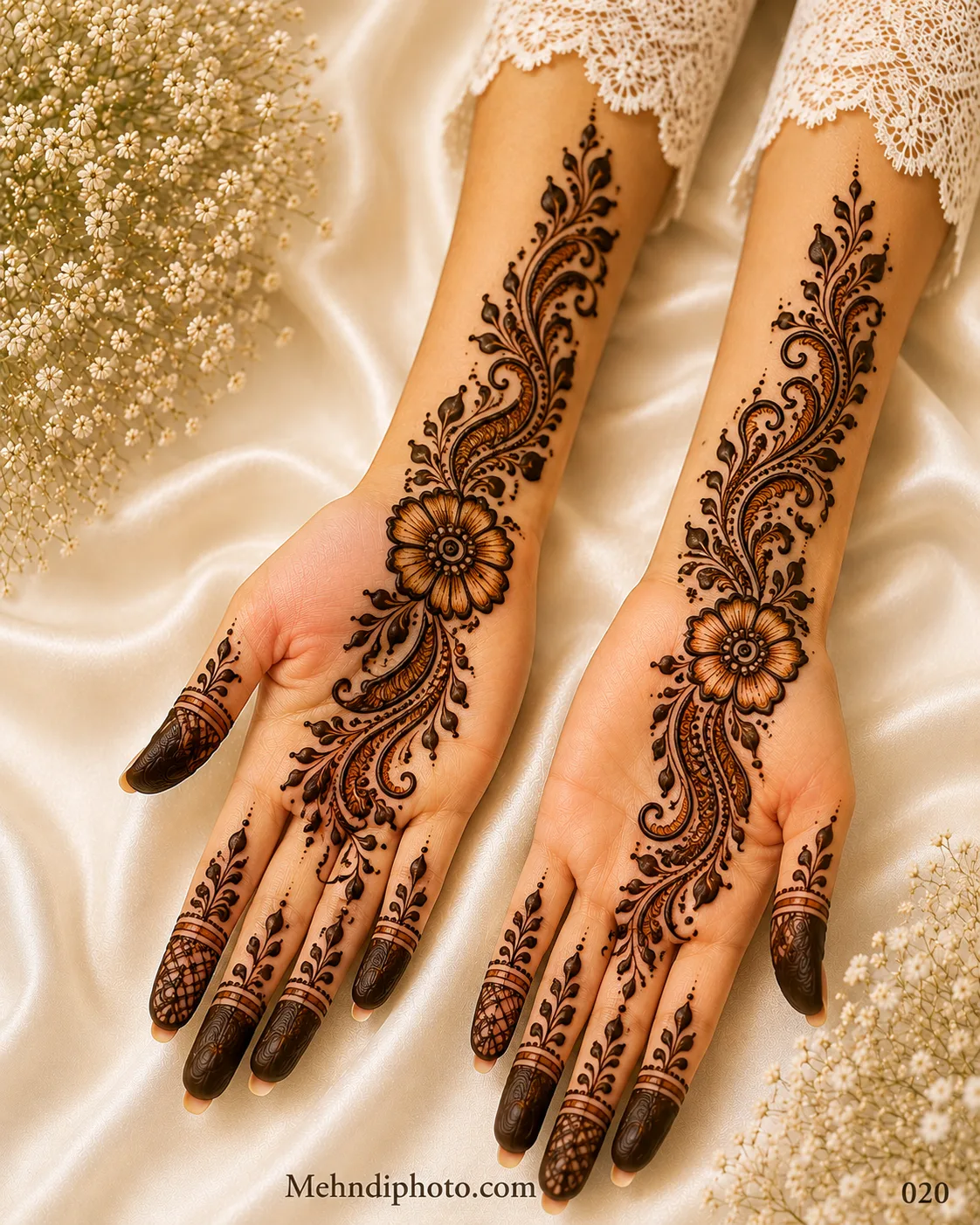
Navratri mehndi should look festive and still feel practical through Garba, Dandiya and long celebration nights. This guide covers simple, floral, mandala, front-hand, back-hand and jewellery-friendly ideas, plus tips for choosing coverage that works with bangles and movement.
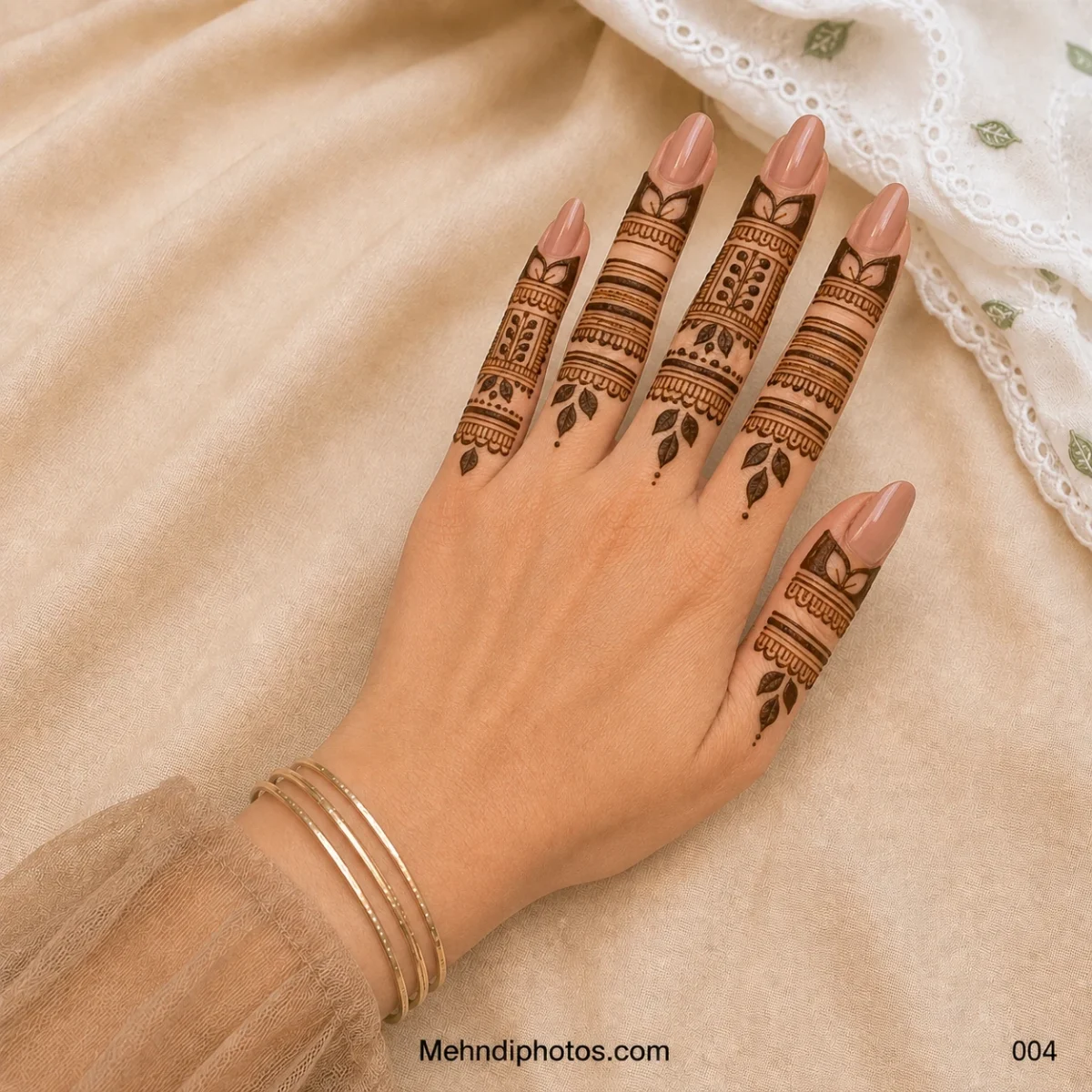
Diwali mehndi can be quick and minimal or detailed enough for a full festive look. This guide covers diya, lotus, floral, mandala, front-hand and back-hand ideas, plus practical tips for choosing a design that works with jewellery, outfits and limited time.
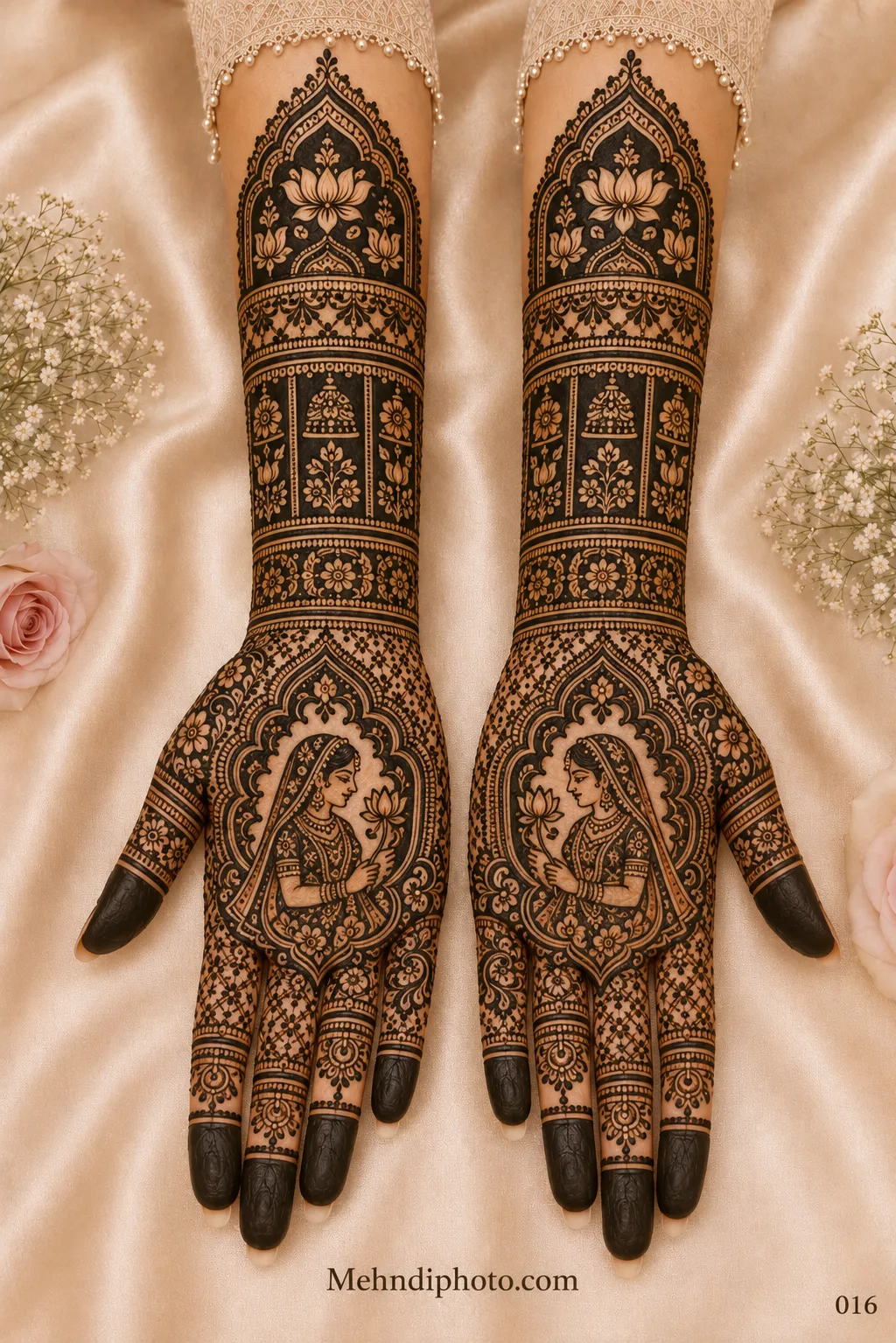
Looking for Karwa Chauth mehndi that feels festive without being difficult to wear? This guide covers simple, bridal, front-hand, back-hand and personalized designs, plus practical tips for choosing coverage, pairing mehndi with jewellery and getting better photos.
Muslim mehndi can be minimal, floral, Arabic-inspired, Pakistani, bridal or jewellery-style depending on the occasion and personal taste. This practical guide explains elegant ideas for Eid, Nikah and family celebrations, with tips for front and back hands, fingers, bridal coverage, placement, symmetry and choosing a design that feels beautiful without looking overcrowded.
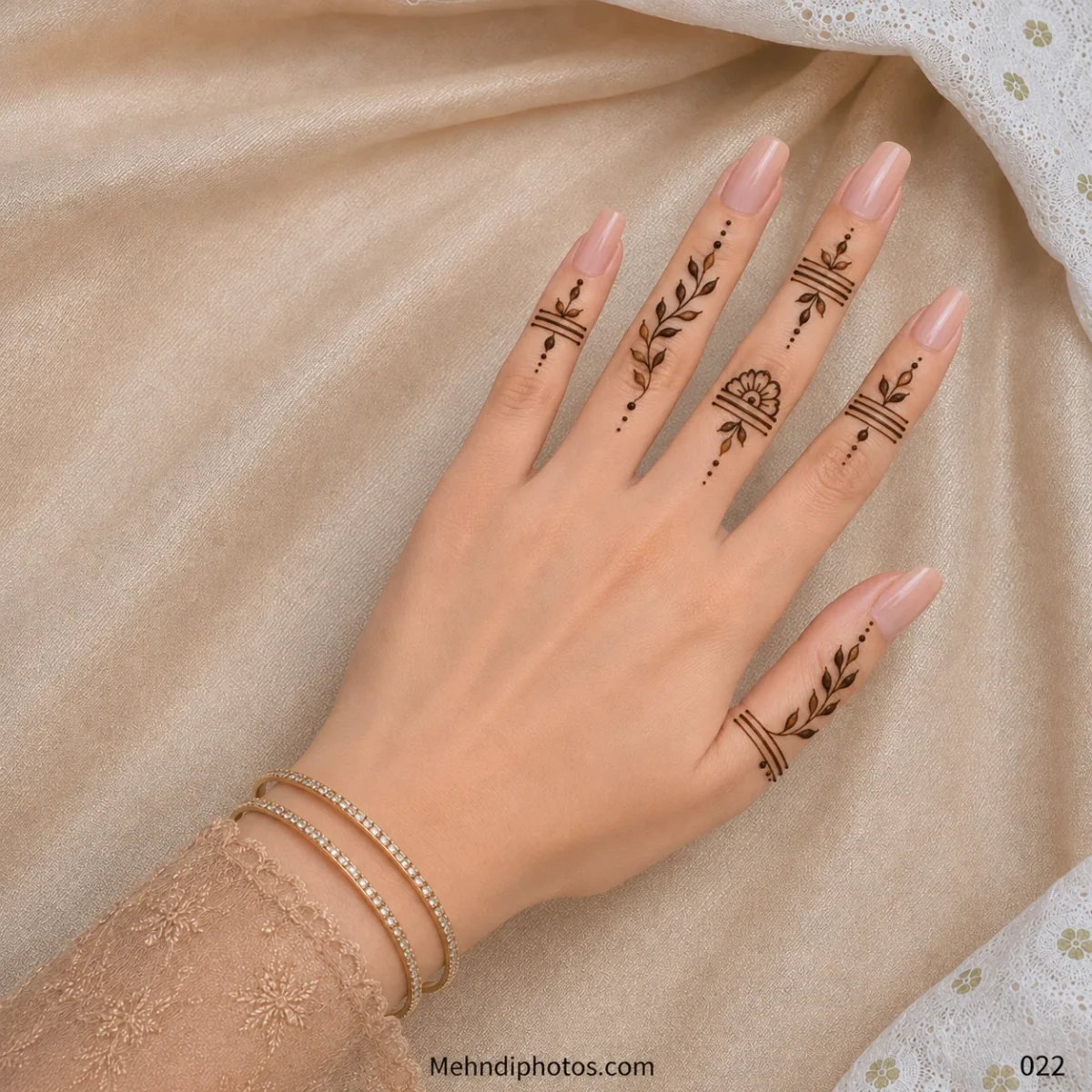
Finger mehndi is perfect when you want a design that feels finished without covering the whole hand. This practical guide explains simple finger bands, floral and leafy patterns, front- and back-hand placement, ring-friendly ideas, bridal options, symmetry tips and ways to choose a design that suits your fingers and occasion.
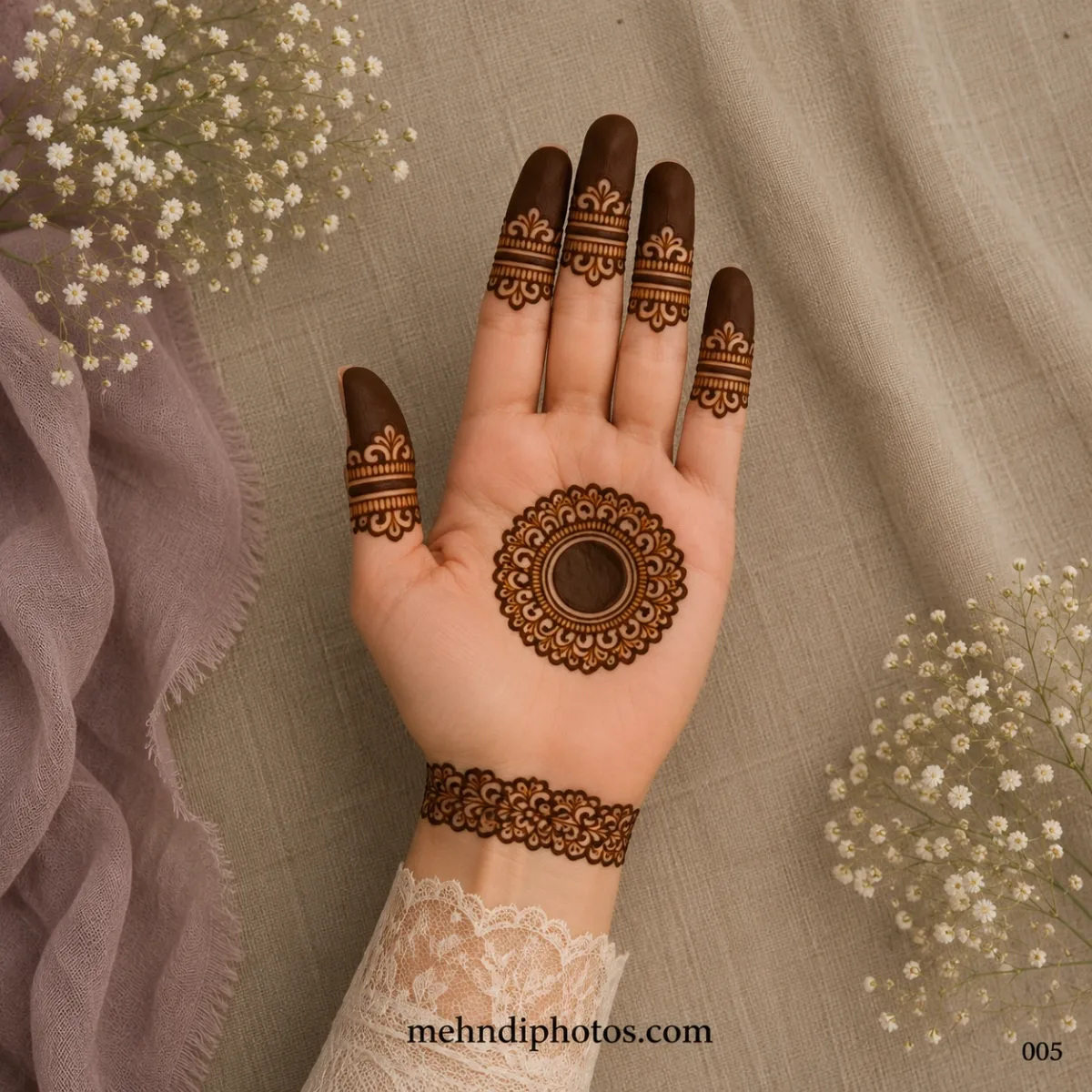
Gol tikki mehndi is one of the easiest ways to make a palm look complete without filling every inch. This guide explains simple, floral, bridal and modern tikki styles, how to size and centre the round motif, what to do on the fingers, and how to choose a balanced design for festivals, engagements and weddings.
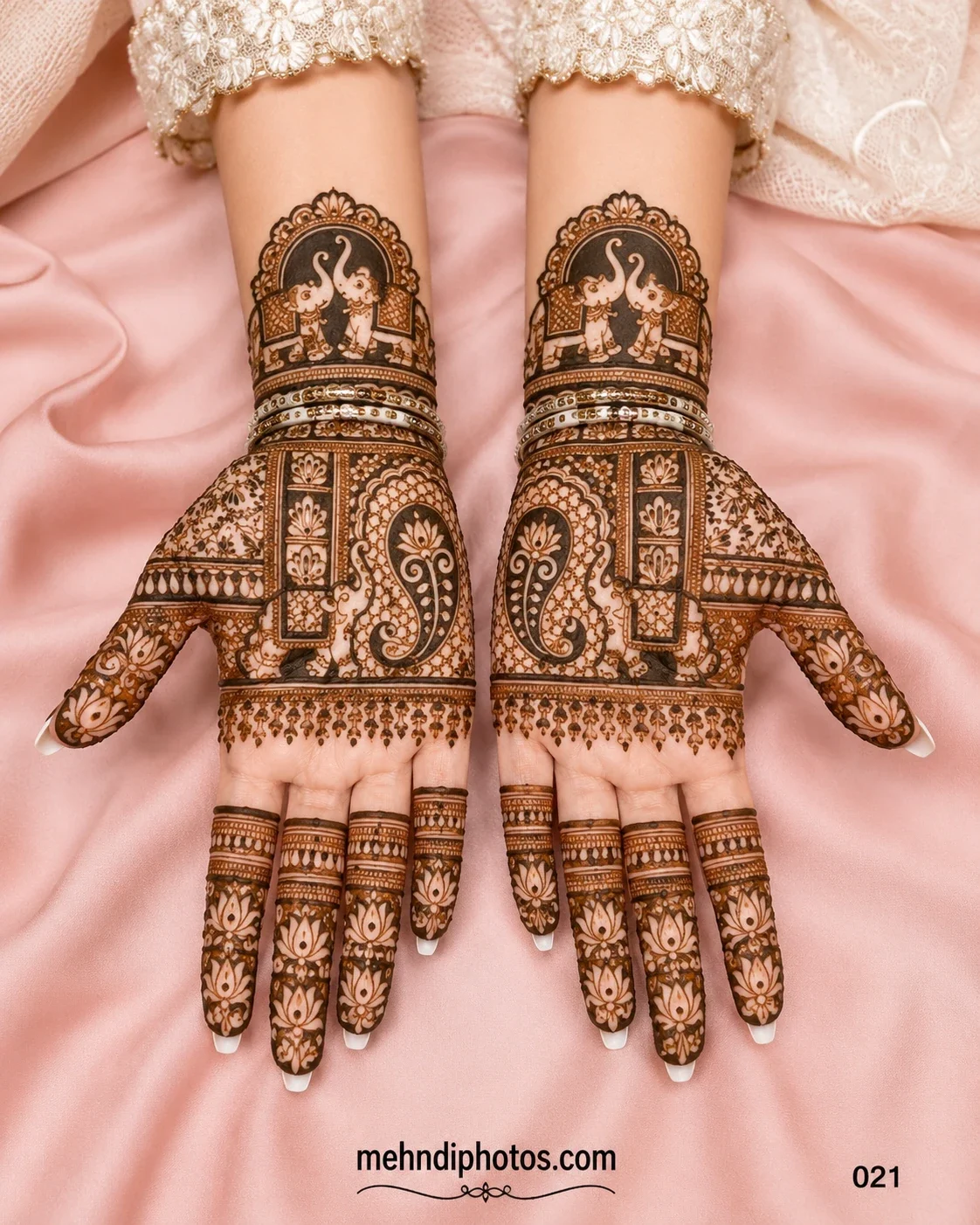
Engagement mehndi usually needs a different balance from full bridal henna: enough detail to feel special, but enough open space for rings, bangles and close-up photographs to stand out. This guide covers front and back hand ideas, coverage levels, personalized motifs, jewellery-friendly placement, design styles and practical planning tips for an elegant ring ceremony look.

From delicate ankle motifs to full bridal feet, this practical guide explains popular leg mehndi styles, placement ideas, occasion-wise choices, design balance, and stain-care tips so you can pick a pattern that looks elegant in person and in photos.
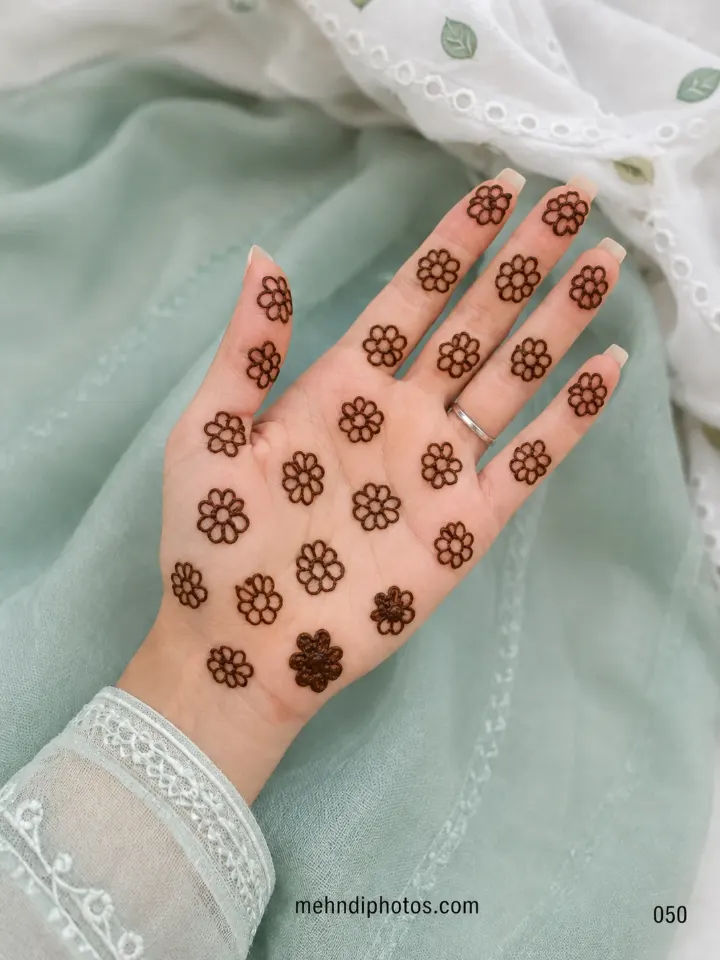
Simple mehndi works best when the design is planned around time, hand control and clean spacing. This practical guide shows beginners how to choose patterns that are genuinely easy to apply, build a design from basic strokes, avoid common mistakes and pick the right level of coverage for everyday wear, festivals and small functions.
Arabic mehndi is loved for its flowing lines, bold flowers and clever use of empty space. This practical guide explains the main pattern families, where each style works best, how to choose for Eid, weddings or everyday wear, and what to show your artist before the cone touches your hand.
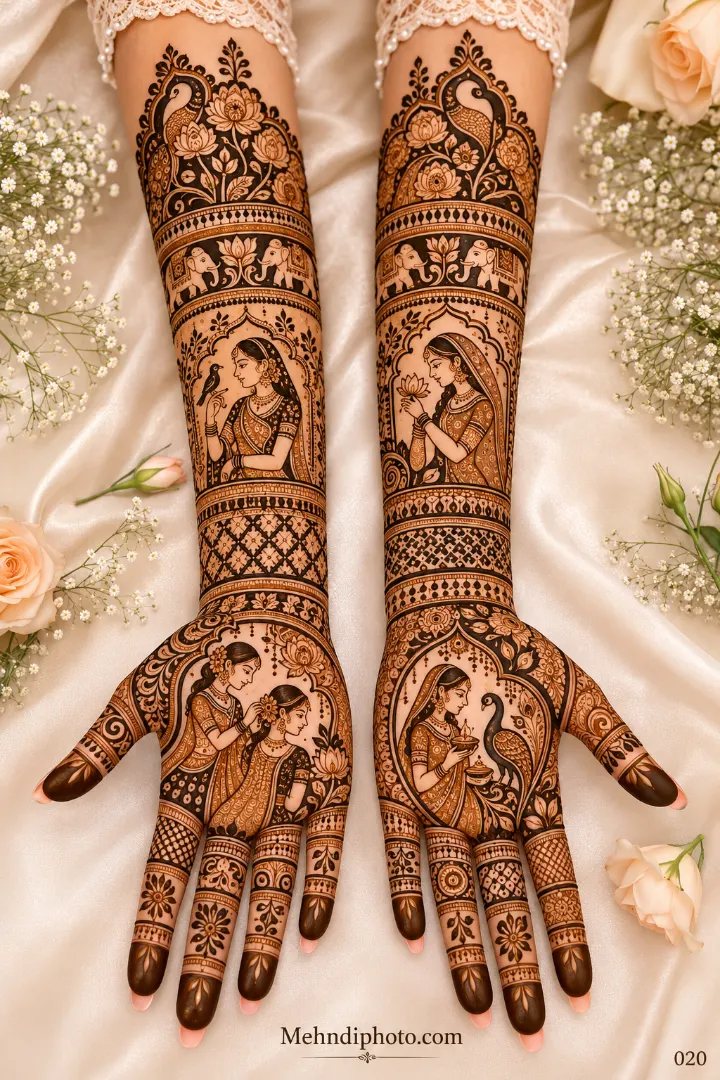
Choosing bridal mehndi is easier when you plan coverage, timing, jewellery, photographs and personal details together. This practical guide helps brides turn scattered inspiration into one complete design.
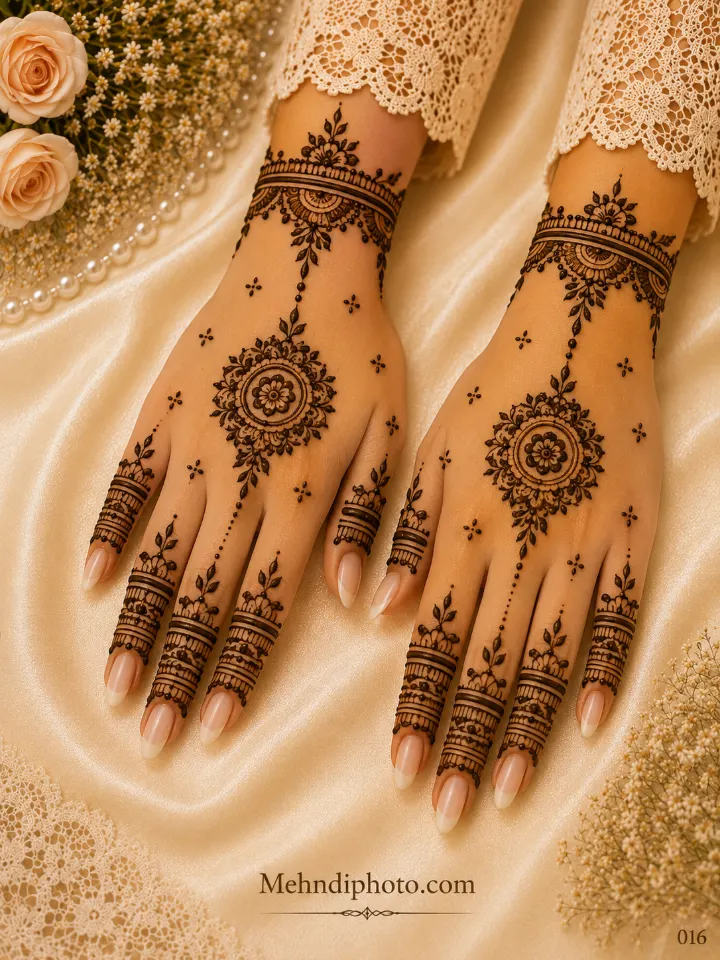
From minimal wrist bands to full bridal work, here is how to choose, apply and care for back hand mehndi — with style, festival and aftercare advice from real experience.
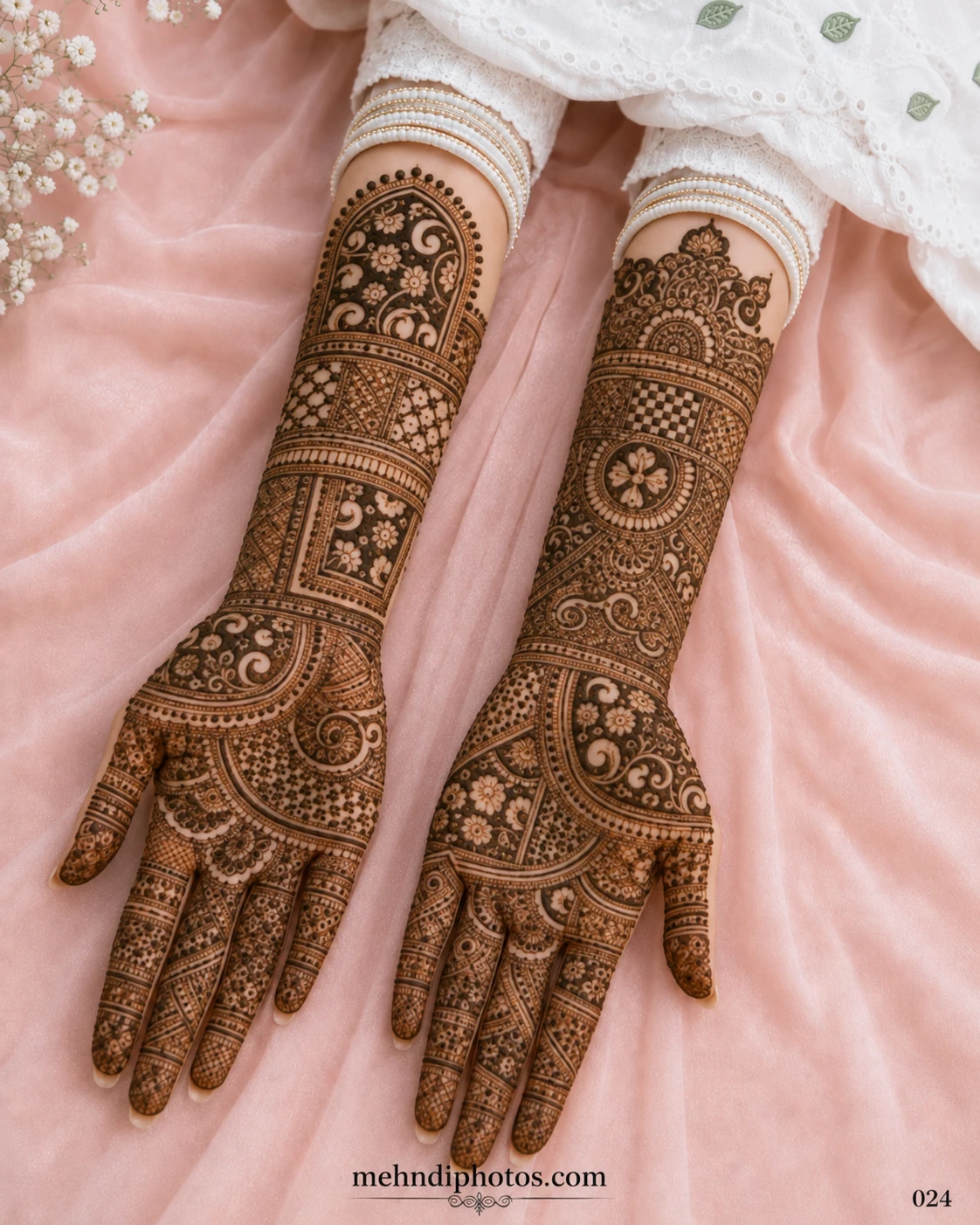
Front hand mehndi is the first thing everyone notices — in photos, in greetings, in every festival selfie. This guide walks you through simple and bridal front hand designs, Indian and Arabic styles, what suits your hand shape, and the small application and aftercare habits that give you a deep, long-lasting maroon stain.
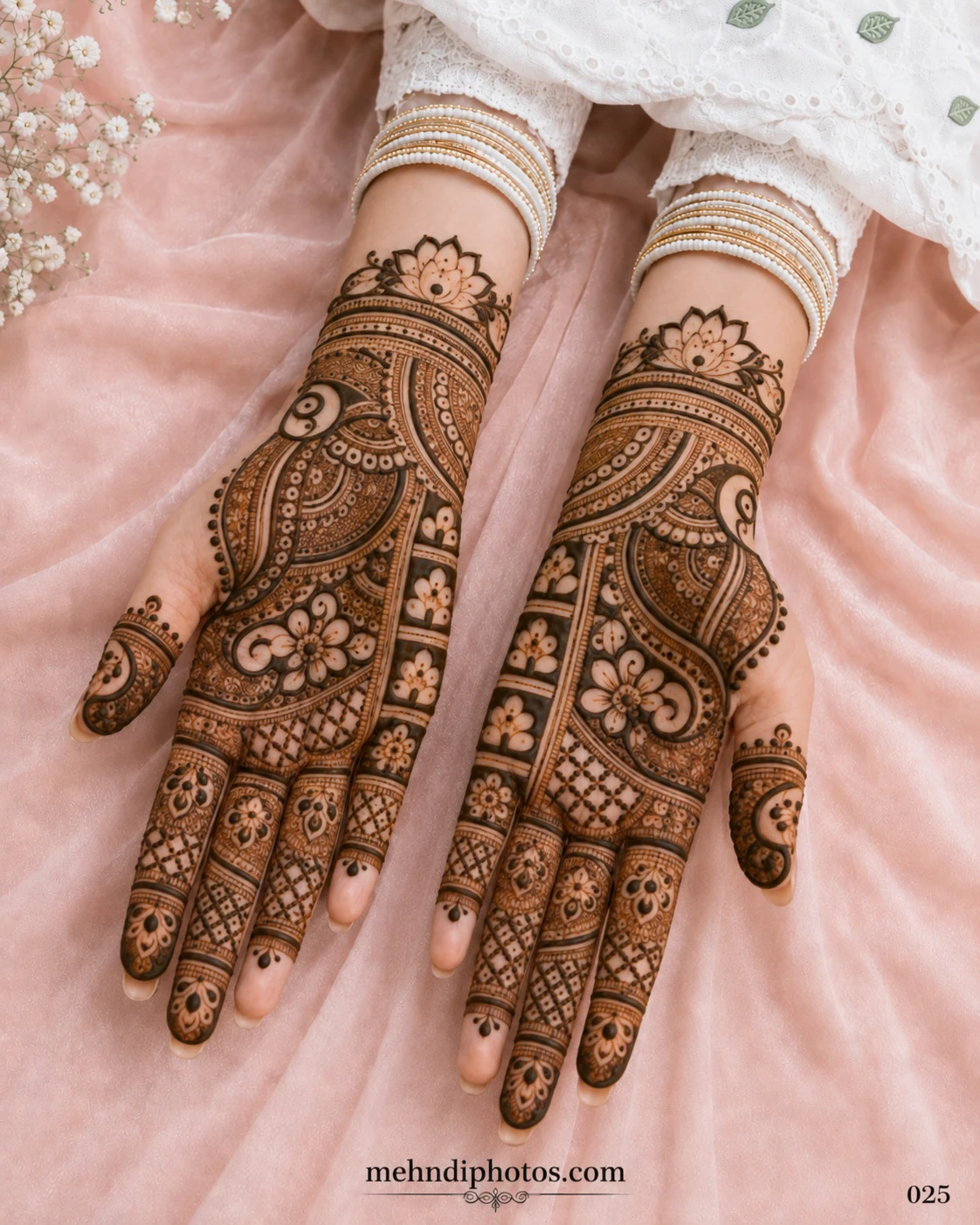
From henna leaves to bridal hands — the story of mehndi, how the paste is made, what it means in Indian culture, how traditions differ across countries, and the tips that give you a deep, long-lasting stain.